
After the October 7 terrorist attack on Israel, Adam Teitelbaum saw something that not many other people did: resilience.
“The Jewish people after this horrific catastrophe were emerging – even if they couldn’t necessarily see it themselves – stronger,” he said.
Teitelbaum set out to make a documentary about that resilience. He had no filmmaking experience, but he started interviewing people whose lives had changed since October 7. After more than 30 interviews, he met Dr. Anna Goldenberg, an American trauma surgeon.
“She had just come back from Israel on this medical training trip, and when she was telling me her story, I mean, it was crazier than fiction,” Teitelbaum said. “All of a sudden, just talking to her painted this story that I’m like, this is the movie.”
Each year, Goldenberg trains surgeons in the ASSET program, a surgical training course developed by the American College of Surgeons. After October 7, she began bringing the training to Israel to honor a colleague she had lost, Dr. Shahar Shivalovich.






He shifted his focus from making a documentary with all the interviews to focusing solely on Goldenberg’s story.
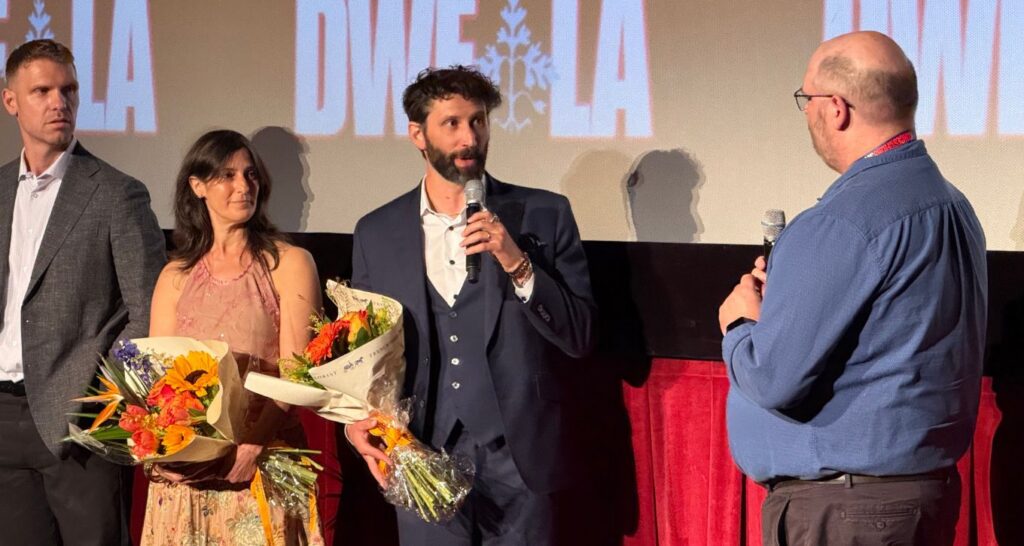
Executive Producer Adam Teitelbaum and Director Ravit Markus at screening (courtesy)
The problem was that Teitelbaum had no experience making films and little money to make one. A friend, an established documentary filmmaker, told him not to do it. His father, who works in television, gave him different advice.
“Everybody who made their first film did it because they didn’t know they couldn’t,” Teitelbaum said his father told him.
That same friend connected him to a networking event in Los Angeles, where Teitelbaum’s father introduced him to Ravit Markus, an award-winning Israeli documentary filmmaker. Markus was intrigued by the story but was busy with another project and to call her when he had more to show.
Undeterred, Teitelbaum kept building the project on his own. He secured small contributions, including a grant from the Jewish Federation of Southern New Jersey, which had helped fund the training program’s expansion to Israel, along with money from friends moved by the story. It was enough to cover a flight, but not much else.
“I went on Amazon to get the cheapest selfie stick, so that I could at least have a little bit of a stationary camera,” Teitelbaum said.
Around the same time, a separate connection led him to an Israeli videographer who had just graduated from film school. That videographer brought on a classmate to serve as a second camera operator.
With a trip booked for March 2025, Teitelbaum called Markus to update her. She had just finished her other project and asked what was going on with his.
“I was like, funny you should call me today, I just got funding to go to Israel,” Teitelbaum said. “Would you want to go to Israel and film with me? And she’s like, ‘yeah, that sounds awesome.'”
Markus signed on, and the team, Teitelbaum, Markus, and the Israeli camera operators, traveled to Israel together that March to film the training.




After reviewing the footage, the scope of the project changed.
“We watched the footage, and Ravit did a five-minute opening rough cut, and we got on the phone with each other, and went, ‘Holy shit,'” Teitelbaum said. “This is a movie.”
The whole team spent another year on the project, including some additional filming through May 2026. The ASSET premiered June 22 at the Dances with Films festival in Los Angeles.
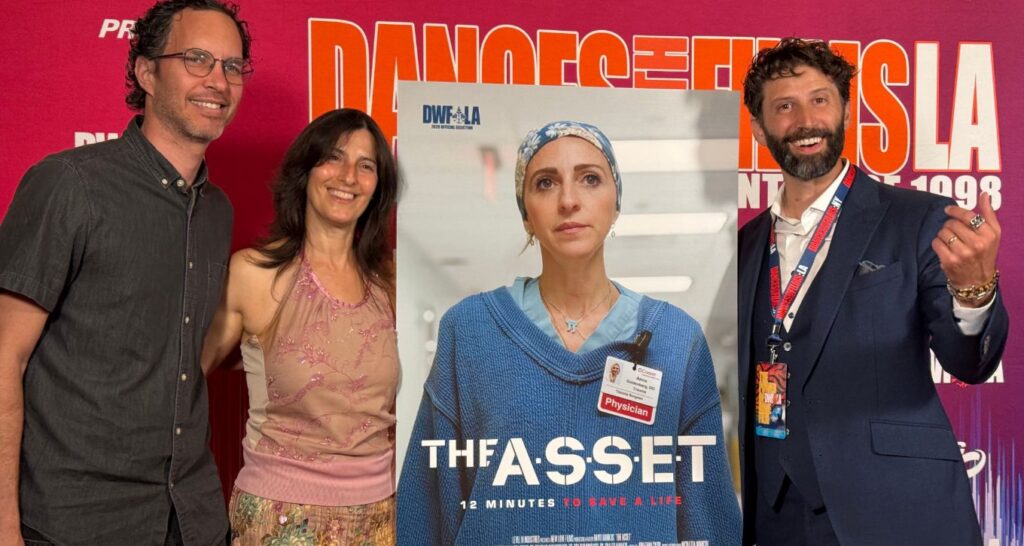
From Right to Left
Executive Producer Adam Teitelbaum, Director Ravit Markus, and Editor Jonathan Caspi
Teitelbaum is taking The Asset documentary on the festival circuit, including Jewish and Israeli film festivals. He also hopes the film can be used as a teaching tool and open conversations on medical diplomacy.
Teitelbaum hopes the film inspires not just the Jewish community but anyone who wants to make a difference.
“I think that by watching this film, people will see in themselves this idea that they have agency, and even when it feels like it’s impossible, the most important thing is to take that first step,” he said.