
On January 27, 1945, Soviet troops liberated the Auschwitz concentration camp. The site where the Nazis and their collaborators murdered 1 million people during the Holocaust. January 27 is designated by the United Nations General Assembly as International Holocaust Remembrance Day.
The exhibit at the Cincinnati Museum Center, Auschwitz: Not long ago. Not far away. opened in October and, so far, has had over 50,000 visitors, according to the CMC. The exhibit will be in Cincinnati until April 12, 2026.
It features more than 500 original objects from the Auschwitz-Birkenau State Museum and other international museums. One of the features that makes this exhibit unique is the highlighting of the stories of four local Holocaust survivors: Edith Carter, Werner Coppell, Henry Meyer, and Bella Ouizel. Museum curators suggest planning at least 2 hours to move through the entire exhibit. It is self-guided, and patrons can move at their own pace.
Visitors are encouraged to visit the Nancy and David Wolf Holocaust and Humanities Center, also located at Union Terminal, before or after their visit to deepen their understanding of the Holocaust. At HHC, visitors can interact with survivor Al Miller through the dimensions in the testimony exhibit.








The Auschwitz exhibit challenges visitors to take the lessons learned and explore how to be Upstanders.
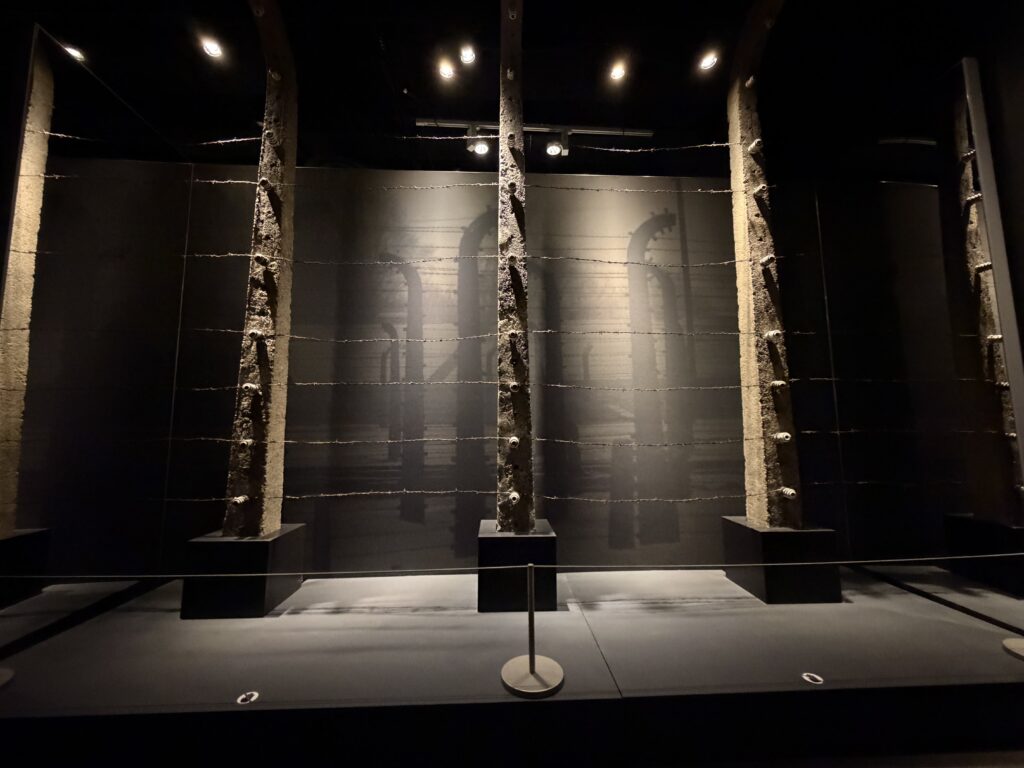
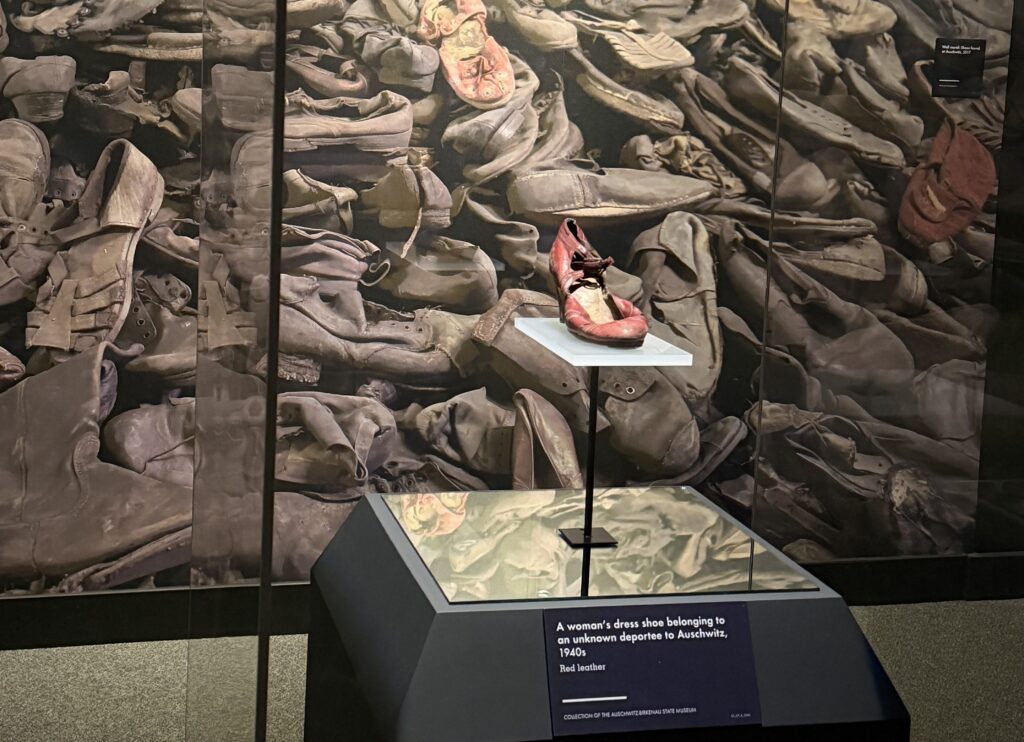
The exhibit begins with three powerful objects: a set of train wheels from a German train, a single shoe from one of the one million victims murdered at Auschwitz, and the cement and metal fence that surrounded the camp. The items represent the curators’ three main characters of the exhibit. The wheels represent the perpetrators, the single red shoe the victims, and the cement fence is the site itself.
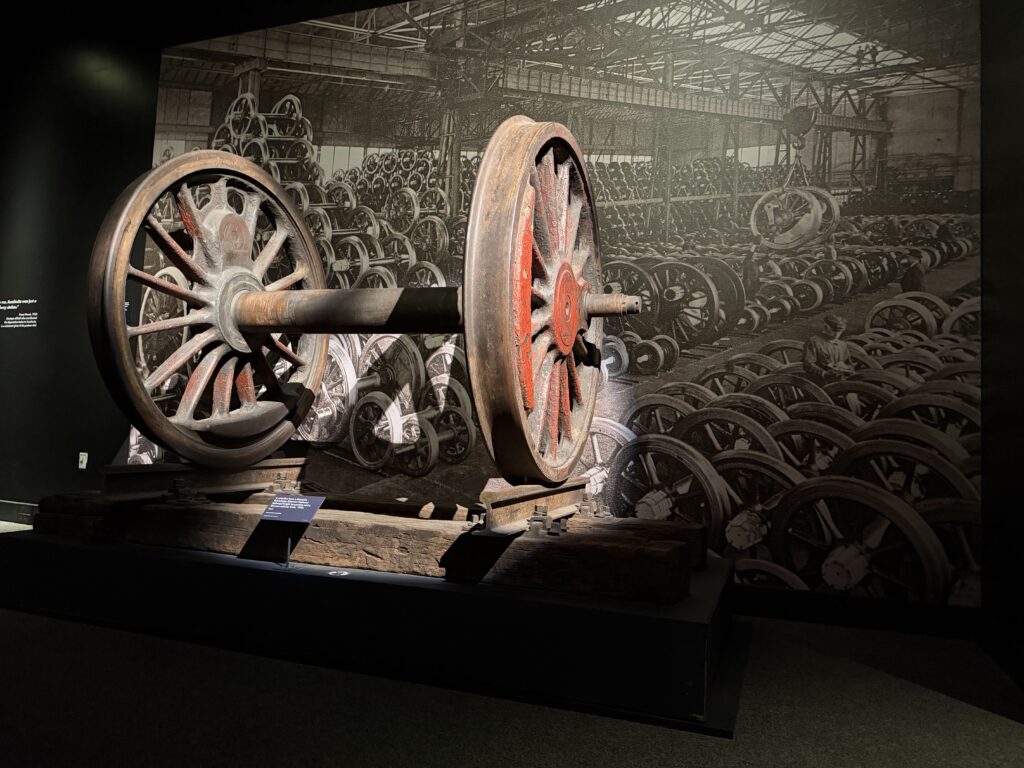
Visitors will learn the story of the town Oświęcim, the Polish name for Auschwitz, which, before the war served as a rail junction and industrial center. The exhibit documents its evolution into one of the darkest places in human history.
Moving through the exhibit, it is easy to be overwhelmed by the destruction on an individual and communal scale. Grounding the narrative are stories of individual victims, some who resisted during the Sonderkommando revolt.
The exhibit lives up to its title, Not long ago. Not far away. It has only been 81 years since the Holocaust. Jews around the world are facing skyrocketing antisemitism. A study by the Anti-Defamation League found that nearly half of adults hold antisemitic views or beliefs.
The Pew Research Center found that 63% of Americans did not know that 6 million Jews were murdered in the Holocaust, and 43% could not name a single concentration camp. A quarter of Americans believed the Holocaust was a myth, was exaggerated, or were not sure.
It is also easy to see parallels playing out in our world today, from the demonization of marginalized groups in political campaigns to the use of the federal government trampling on civil liberties.
Auschwitz: Not long ago. Not far away. is more than just a piece of history. It is a warning from the past, begging us in the present to listen and learn.