
Recipes: Olive Oil Cake & Olive Tapenade
When we think about Hanukkah, we think about latkes. And when we think about latkes, we think about potatoes. But we SHOULD be thinking about the oil.
The mythical miracle of the Hannukkah story is about the oil, specifically extra virgin olive oil. The story says that when the Temple was re-dedicated, only a single unbroken vessel of oil was found to rekindle the light over the ark. It was barely enough oil to stay lit for a day, but it lasted a full eight days – long enough for fresh olives to be harvested and new oil to be pressed.
So, even though the original Hanukkah story relates to oil used for light, somehow, over the centuries, we have come to celebrate by eating foods fried in oil and lighting candles made of wax.
Don’t get me wrong. I love latkes as much as anybody, maybe more because my Dad (z”l) made absolutely the best latkes ever. My sister continues his legacy – she has his frying pan – so, of course, we will enjoy amazing latkes this year as always. But we don’t fry latkes in olive oil, and neither should you. Today’s recipes offer two ways to enjoy olive oil during Hanukkah. A third option is to use a menorah that burns oil instead of candles.










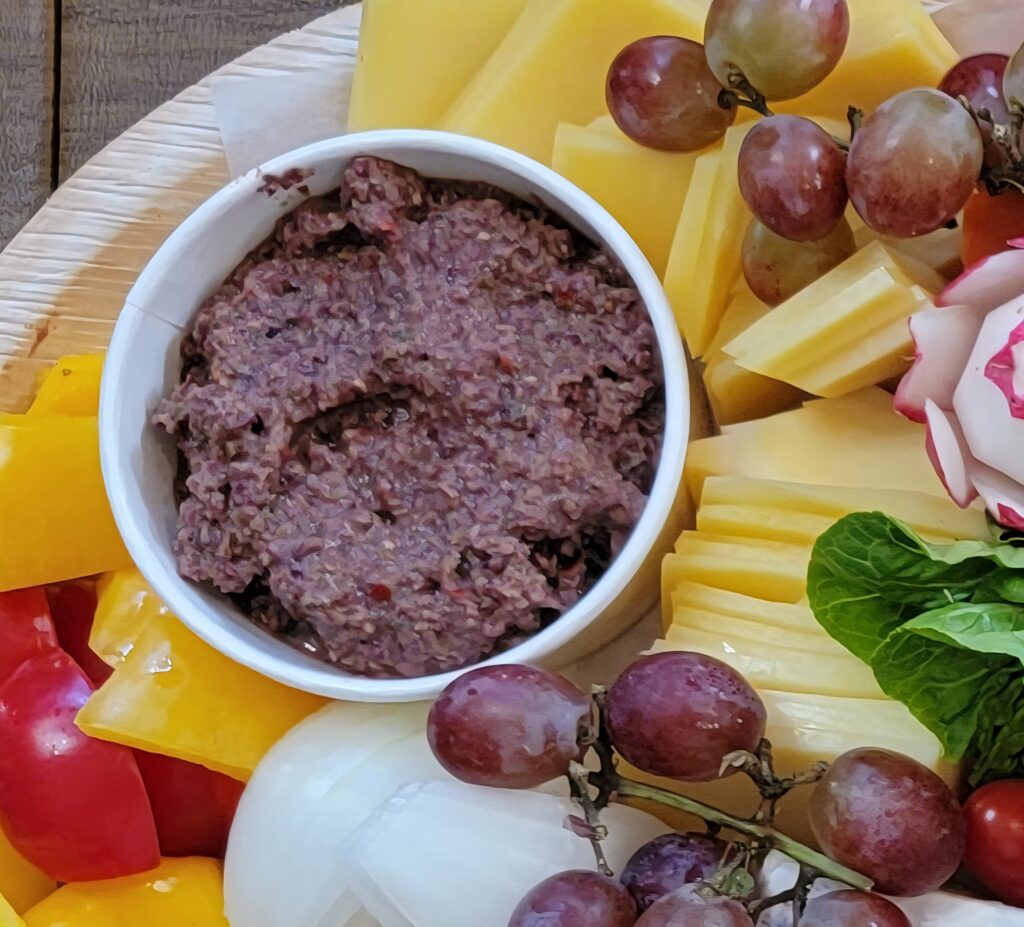
Olive Tapenade
Olives are one of the Biblical seven species – the seven crops native to Israel that define the land’s bounty. Olives and their oil are used not only as food, but also in soap, medicines, and cosmetics.
The Israeli olive oil industry has exploded over the last 25 years. Olives are grown on kibbutzim (communal farms), moshavim (co-operative farms), and on privately owned farms, both large and small. Many orchards are relatively new – thousands of olive trees were planted in the 1990s – but ancient groves still exist too, filled with generations of trees that still produce fruit. In the Negev, some ancient groves are fed by underground springs of brackish water – a mixture of salty and fresh – a combination that is mimicked in other areas with irrigation.
Like grapes, olives come in many varieties, each with its own flavor profile. Most olive oil, even extra virgin, is blended from a selection of varietals to maintain consistency of the brand. Some Israeli oils are also blended, but many higher-end producers specialize in single varietals – oils pressed from only one type of olive. Some of the more popular varietals are Syrian Souri, Barnea, Kalamata, and Manzanillo. Like wine, these oils can vary from vintage to vintage, depending on the weather and soil conditions each year.
Unfortunately, good Israeli olive oil is difficult, if not impossible, to find locally – you’ll have to shop online to get some. At local stores, most of the olive oils are from Italy, Spain, and Greece, with smaller selections from California, Australia, and South America. Like Israel, these producers take their olive oil seriously. When buying extra virgin oil, look for labelling or official seals that indicate inspection by a national authority that oversees the olive oil industry, which has been beleaguered by scandals over the years.
High price is not always an indicator of good quality, but beware of unusually low prices for oils that claim to be extra virgin. Labels that indicate harvest or bottling dates are a better indicator; look for dates from October through December – some people say the early part of the harvest in October produces sweeter oils than olives picked later. Olives harvested after the first frost are considered overripe and not usually sold as extra virgin.
Here are two olive oil recipes to try this Hanukkah. Chag Sameach and Enjoy.
Olive Oil Cake
Olive oil makes a moist cake that doesn’t dry out like a cake made with butter. It has the added benefit of making a parve cake. This beautiful, dark golden cake can be dressed up with fruit, chocolate & whipped cream for dessert or enjoyed in its plain, humble form with morning coffee or tea.
Ingredients
1¼ cups plus 2 tablespoons extra-virgin olive oil; plus more for pan


1 cup plus 2 tablespoons sugar; plus more for the pan
2 cups all-purpose flour, minus 2 TBSP
2 TBSP corn starch
⅓ cup almond flour or finely ground almonds
2 tsp baking powder
½ tsp baking soda
½ tsp kosher salt
3 TBSP sweet liqueur, like Amaretto, or apple or orange juice
1 TBSP finely grated lemon zest
3 TBSP fresh lemon juice
2 tsp vanilla extract
3 large eggs
Directions
- Preheat oven to 400°
- Prepare a 9-inch springform pan. Oil bottom & sides; line bottom with a round of parchment paper; coat parchment with more oil. Sprinkle pan with sugar, tilt to coat, & tap out excess.
- In a medium bowl, whisk together dry ingredients.
- In a separate bowl, combine liqueur or juice, lemon juice & vanilla.
- Using an electric mixer on high speed with whisk, beat eggs, lemon zest, and 1 cup plus 2 Tbsp. sugar until mixture is very light, thick, & pale – about 3 minutes in a stand mixer, about 5 minutes with a hand mixer.
- With mixer still on high speed, gradually stream in 1¼ cups oil and beat until incorporated and mixture is even thicker.
- Reduce speed to low and add dry ingredients and liquids, alternating, beginning and ending with the dry ingredients.
- Fold batter several times with a large rubber spatula, making sure to scrape the bottom and sides of bowl. Scrape batter into prepared pan, smooth top, and sprinkle with more sugar.
- Place cake in 400° oven and immediately reduce temperature to 350°. Bake 40–50 minutes, until top is golden brown, center is firm to the touch, and a tester inserted into the center comes out clean.
- Place pan on a wire rack and let cake cool in pan 15 minutes.
- Poke holes all over top of cake with a toothpick or skewer and drizzle with remaining 2 Tbsp. oil; let it absorb.
- Run a thin knife around edges of cake and remove ring from pan. Slide cake onto rack and let cool completely. For the best flavor and texture, wrap cake in plastic and let sit at room temperature at least a day before serving.
Olive Tapenade
If you can’t find pitted olives, put olives with pits on a cutting board and roll them under the heel of your hand to break them and release the pits.
This tapenade will keep for a couple of weeks in the fridge. It’s a savory, umami loaded snack on plain crackers – perfect for happy hour.
Ingredients
½ LB black Israeli olives, pitted
1 large clove garlic, minced
1½ TBSP capers, drained
4 to 6 anchovy fillets, minced
½ to 1 tsp fresh thyme, chopped
½ to 1 tsp fresh rosemary, chopped
2 TBSP fresh lemon juice
1 tsp Dijon mustard
2 TBSP extra virgin olive oil
Freshly ground black pepper
Directions
- In the bowl of a food processor, puree olives, garlic, capers, anchovies & herbs.
- Add remaining ingredients and continue to process until smooth.
- Serve with crackers, bread, or latkes.


I highly recommend reading Gayle’s article about making Latkes. There’s a link in this story. If you want to “wow” your family and friends this Hannukah, follow the recipe in that article. Trust me, seriously.