
Who the Folk?! Cincinnati is Cincy Jewfolk’s new podcast spotlighting the diverse voices shaping Jewish life in the Queen City.
Hosted by Cincy Jewfolk’s editor Sam Fisher, the series features conversations with notable and fascinating Cincinnati Jews—from artists and entrepreneurs to community leaders and culture-shapers.
Each episode dives into personal stories, passions, and perspectives, showing that Jewish life here is anything but one-size-fits-all.The Who the Folk?! Cincinnati podcast is part of the Jewfolk Podcast Network and a product of Jewfolk, Inc.
If you have suggestions for Who the Folk? Cincinnati podcast guests, please fill out this form.
Be sure to check out the entire series and follow along as Sam interviews and features notable Cincy Jews & Jews doing interesting things in the Queen City!










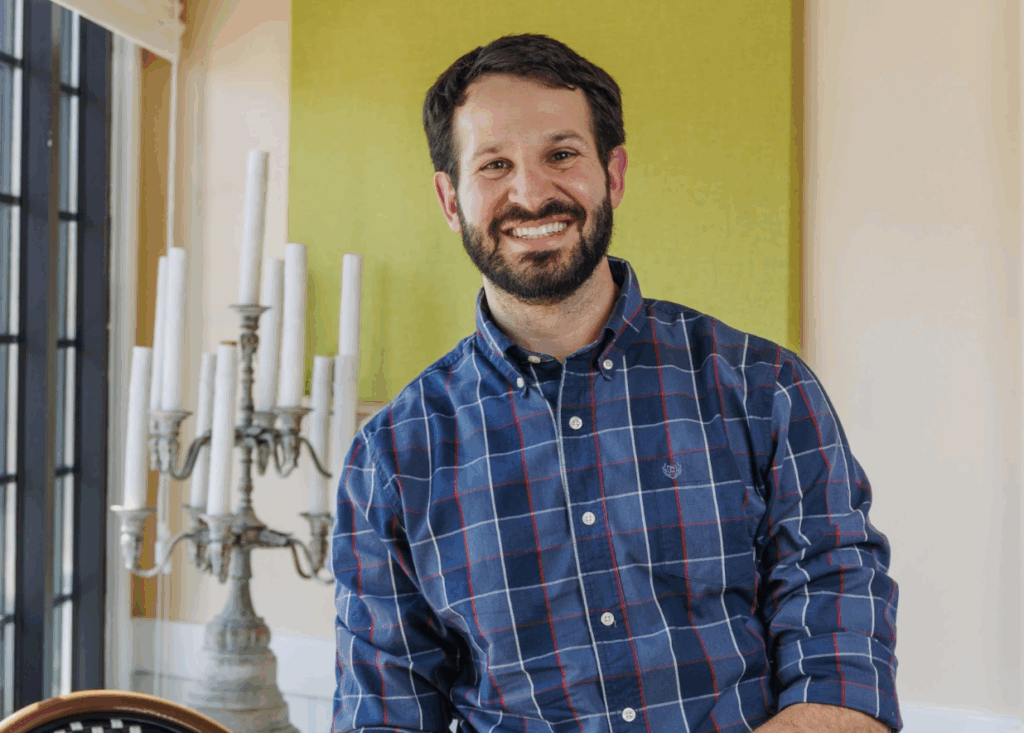
Introducing this week’s WTF?! Cincinnati’s guest
Yair Richler was born in Montreal, Canada, and raised in Efrat (Jerusalem), Israel. While completing his BA in Business Management and Sociology, he managed his parents’ beloved bakery in Jerusalem. After marrying Lainey, that passion followed him to Cincinnati and opened Café Alma with Lainey in 2022. They have three beautiful kids.
Listen to this podcast episode
A note for you
Below, you’ll find a full transcript of this interview. We provide these so that you can read along, catch anything you might have missed, or revisit your favorite moments.
We do our best to make sure everything’s accurate, but if you spot a typo or mistake, that’s on us. We hope you’ll enjoy listening — and reading — along!
Show transcript
Sam: So let’s start with the easiest question. First, who are you?
Yair: Wow, who am I?
Sam: Who are you?
Yair: Oh, my gosh.
Sam: On a very base level … just your name.
Yair: Canadian born, Israeli, bred and raised. I am a 34 –I can’t believe we still think about that– 34 year old male.
Sam: You can if you want to.


Yair: I just did.
Sam: So yes, this is a complicated question as well. Where are you from?
Yair: So, born in Canada.
Sam: Where in Canada?
Yair: Montreal, Canada. The French Canada. There is no other Canada in the land.
Sam: I would say most, I would say the separatists in French Canada don’t want to be Canada. I think that’s …
Yair: Is that still a thing? There’s still, like a separatist movement. There’s still a separatist movement. Yeah, it’s been a while since I’ve been back. So honestly, I’m not so connected to the Quebecois Canadian.
Sam: How long did you live in in Montreal?
Yair: Five. Me and my family, it’s not as if I had a choice, neither did I have a choice when my parents decided to pack us all up and move to the Holy Land of Israel with my older brother, my younger sister. So the three of us, my parents, and then two younger siblings who were already born in Israel called South …
Sam: So your parents packed you all up in the proverbial minivan?
Yair: Which came with us. It came with us to Beit Shemesh.
Sam: That’s my next question. Where did you grow up within Israel?
Yair: So Beit Shemesh lasted for three years. Not the Beit Shemesh that people may think of today, Ramat Beit Shemesh, where it’s like, very religious type, and they’ve got now, like Aleph Bet, Gimel, like five different Ramat Beit Shemesh. No, it was Gaviata Savion, very secular, Beit Shemesh.
Sam: And for the people who don’t know where Beit Shemesh is?
Yair: Where is it? It’s on the outskirts of Jerusalem. I guess, if you’re not too familiar with the area, biblical history, historical Beit Shemesh. It’s near the valley where the story of David and Goliath took place, known as Emeq HaElah and yeah, they changed the house of the sun. Don’t know how long it’s existed. When did they change? I have no idea. But regardless, it didn’t last long, because, like I said, back then, it was, and probably still is, that area quite secular. And my parents, I think, were in the mindset of, we didn’t pack up our lives, and we’re not the religious Zionists who moved to Israel to live in secular Israel. It’s like we need a more religious setting. And then three years later, in 85 in sorry, in 98-99 is when we moved to Efrat, which is where they live till today. So 30 years later.
Sam: So you spent your formative years in …
Yair: Efrat …
Sam: And what was, what was your childhood like, growing up in Israel versus, you know, you till five, you’re in Montreal, and then suddenly you are transported to a very different place. Yes, in Montreal, very and what was that like transitioning from one to the other?
Yair: I have, I have many memories of Beit Shemesh, but probably the most prominent one is fear of Hebrew. I think I was terrified. I think I was just I wasn’t a good, a good student, and I wasn’t educated, and I didn’t learn the Hebrew language. We didn’t grow up with it in the household, it was all English. And, yeah, my Hebrew was terrible, and was for many, many years. It’s not as if Efrat helped, because Efrat is a very Anglo Saxon heavy culture. And, yep, so a lot of, a lot of a lot of English speakers, a lot of expats, and in Efrat, yeah, like American, Canadian, English, British English, South African, Australian. It was terrible. All of my friends spoke English and yeah, and it wasn’t until high school where I think I really grasped the language. But that’s probably also why now, even we don’t live in Israel right now, but with our kids, I try very hard to speak only Hebrew too, so that at the very least they know now the two languages and they’ll …
Sam: … Be able to understand. And was picking it up in high school. Is a thing of you wanted to really fit in. Feel like you, you’re sick of feeling a little bit …
Yair: I think it’s just it, just it just clicked. Eventually it’s like you, you know, throw yourself into a into a country for long, and especially at that age, no matter how slow of a learner you are, eventually it’s just going to click. You know, that adolescent, teenage age, and, yeah, I just, you know, spoke it more, got it more.
Sam: And that’s also that age where you want to start talking to more in different kinds of people, in different settings, yes, in different settings. Different settings, that’s for sure.
Yair: Yeah, different groups.
Sam: Maybe there were more Israelis?
Yair: No, not really. Even high school was very high school is very my high school, your high school in again, Efrat was called Avot Yehuda, Yeshiva High School. And, yeah, there’s 34 kids. Again, like the majority spoken, spoke English, although my best friend was French, Israeli or Israeli French, so he didn’t really speak English. Nice, I mean, he understood, but we would never speak in English. It was always Hebrew. So maybe that also contributed to the improvement of my Hebrew.
Sam: I would say, so yeah, it sounds like it was. It’s like, meet people, and suddenly, that’s the only that’s the way they communicate is this. So you have to, yeah, yeah, that. Or, you know, there’s maybe sometimes, when you get to teenage years, you want to talk to people more than just your buddies. You will start expanding that circle.
Yair: Yeah, yeah, even further, sure, you know, expanding it. Yeah.
Sam: So after high school, you end up, just like all Israelis, going into the army.
Yair: Well, not immediately. I did a pre army program, which was in Beit Rimon so lower Galilee, I think, is what technically the area, and I spent a year, just over a year over there, which is, you know, again, like more studying, like religious texts, physical training, so getting into shape, running, carrying weights, little bit of navigating.
Sam: So it’s just a physic … so it’s partially a physical prep program?
Yair: Like a mentality kind of thing. It’s but I guess here in America, would be called a gap year. Some people take their gap year in, in Israel, some people might take their gap year. I think it’s quite uncommon, but would do it, who knows, doing some kind of community service. It’s very common in Israel to do something of a gap year, at least in my circles. And, yeah, I chose a pre army program. So it wasn’t a Hesder Yeshiva program, where you go into hesder and it’s three and a half years, and then you only really do, effectively, a year and a half of army service. And it’s, you know, going with your, your, what’s called Sheer Yurav, your class in yeshiva. So that was, that was one option which I didn’t do. I did a pre army program, which is typically a year or a year and a half until your draft date, yeah, which you defer by a year. So depending on when you’re drafting, it’ll, you know, that’s, that’s the time you’ll be at.
Sam: So as a program that, not only for you physically, but prepared you mentally for the challenges that are going to come.
Yair: Yeah, because it’s not, it’s not easy the army, and even for, let’s say, Americans who like American Jews, who may decide to go to Israel and join the army, join the IDF, which is not unheard of. Many people do it, and maybe in their mind, they have some kind of fantasy of, like, I’m gonna be, you know, a pioneer defending the states, you know, defending from Jewish settlements, from invasion, and things that maybe were more relevant in the 40s, but, but no, the army can be very, very boring, and that’s a huge test. You will be standing around for hours at a time just guarding a post. You can be guarding a container, yeah, for hours, for hours on end. You don’t even know what’s in the container, just standing there, guarding it, and if you, you know, sit down, fall asleep, do whatever, and the commander comes by, if you’re, you’re staying in for for that weekend.
Sam: Yeah, and is that a lot of what you did?
Yair: Thankfully, no.
Sam: What did you do in the army? If you can talk about it?
Yair: Yeah, what I did is nothing. There’s no secret. I wasn’t in intelligence
Sam: Even though there’s something we [Sam and Lainey] actually didn’t talk about that.
Yair: About what? Intelligence?
Sam: Yeah, when I spoke to Lainey.
Yair: Oh, for that. Yeah, exactly. She won’t. I don’t even know what she did to that, to that extent. And I’m married to her, and I agreed to marry her, knowing that I’ve had the opportunity. It’s for the better, for the security of the State of Israel. No, me. I drafted into, I drafted into the, what’s called the combat engineers on the Hakravit that was in November of 2009 and started out over there, I they have some, like, elite unit where, granted, I didn’t really know what I was getting into. And this, I think, is maybe, like, a little just lacking, maybe my pre army program of, like, really knowing the different units and where I would like to be or who would like to draft in with. I was just like, oh, they sound super cool. You know, combat engine. Know, combat engineers. It’s basically explosives. Yeah, that’s, that’s what they deal with. It’s mines, land mines and tank mines and and explosives and, you know, taking down buildings, which was very popular, but very much on the forefront of the IDF, especially in the last war that were that we’re having now. So so started out over there, and they quickly, like, have like tests or like training days for for like, their elite unit and combat engineers. Has some that’s called yahalom, which is nice because it it means diamond, yeah.
Sam: Yahalom is a diamond in Hebrew?
Yair: But, yeah, yahalom is an acronym for … Let me see, so units, engineering units for special operations.
Sam: Okay, so it’s kind of nice, and that’s what you wanted to go or that’s what you did.
Yair: That’s, that’s what I had heard of. I was like, oh, that sounds like really cool. And, and I did that training day, and I passed it, and I was in, yeah, how long for? Like, a year and a half, which sounds like it was a long time, and it is a long time only to not finish the, yeah, I know it sounds very depressed. It’s like, after a year and a half, and it’s like, yeah, you actually don’t fit in. Or, you know, we decided to, kind of like, kick you out or whatever, yeah, which is also a process. It was very, very depressing. But I ended up being in the reconnaissance unit. So after they, you know, after I was kicked out of there, they, you know, you can decide they wanted to keep I was okay, backtracking. Backtrack. Yeah, during that training, I’d also had a medics training part of and that’s sounds like for myself. So I’m a combat medic and the combat engineers, yeah, and they, while they didn’t want me being a, I guess, a combat part, like, any how long they’re just like, oh, but we want you to stay here as, like, as a medic on base. And I’m thinking to myself, I didn’t draft into the IDF to be like a medic. And, yeah, in an infirmary, I guess what you call it on a base. Yeah, typically those jobs are called jobniks, which is like a jobnik, but yeah. And the army, the army is split into, like different titles. And you have kharavee, which is combat, and you have a jobnik, which is a desk job. Yeah. And being a, being a, being a young man … growing up in Efrat and making aliyah as a Jewish Zionist …
Sam: You had, you had that idea of wanting to defend.
Yair: I was here to exactly defend my, my country. Whereas the saying goes, at least in combat engineers, it’s to die or to conquer the the mountain, which is a so silly saying that was an adult, you’re just like, Well, why die to conquer? But that’s the mindset of being in at the end of the day. That’s the mindset that you need to be in. There should be no illusion the army. Being a combat soldier in the Army is a dangerous job. You put your life before the civilians. That’s how you have to see it. It’s who you are. You have to be willing to, well, not sacrifice yourself unnecessarily. But definitely, you’re putting yourself in harm’s way to protect the civilians of the nation.
Sam: So where in this journey, because while you’re in the IDF, that’s where you met your wife, right?
Yair: No, no, she was in the IDF. I was your typical kaveer, your combat soldier, the reconnaissance unit of combat engineers, blah, blah, blah, for three years. It was three years and, well, technically, three years and a week, because I had my last …
Sam: They wanted you for that extra week.
Yair: They really want, well, it was Amud Anan. It was, what’s defend, what they call it in 2012 operation, defensive edge. No I’m mixing up two
Sam: There was effectively something going on.
Yair: There was something going on in 2012 and I was basically on the border of Gaza for an extra week? Yeah, I remember that. So that was, that was me. That was my three years. Lainey … when did she draft? She must have drafted in 2010 …
Sam: You have no idea …
Yair: She was in there for like, eight years, yeah. So I was, well, I was in university.
Sam: You were in university?
Yair: And she was on the army.
Sam: What did you do right after the army? Did you go straight to university? Did you take some time to go to Argentina or …
Yair: I wish. Well, I did that afterwards. I don’t. I did do that. But no, not at that point in my life. I got out of the army broke because when I was back, when I was in the army, it was a salary of was I gotta take 706 Shekel a month, good month, a month, it’s like a month.
Sam: That’s like $300.
Yair: No, it’s less. It’s like $200 maybe even less than that. Yeah, around that a month is what you’d live on.
Sam: That’s flush pay, right?
Yair: And, oh my gosh, I was living it up. I was buying what we call chukulukim, which are like snacks from the sheken you’d buy on your Bamba and your coke. And it’s like, okay, great. Or like, you go out on the on the weekends, the off the weekends that you do get off and you go out and buy beers with your friends. Like, okay, that was it. So basically, got out of the army with no money. Yeah. I was like, Okay, well, maybe let’s start working. Let’s apply to universities. Let’s work a little bit. So I used my medic training to be a guard medic and eventually also, like camp counselor for American tourist groups.
Sam: So you were that, you were the guy with …
Yair: I was the guy with the outdated rifle and big backpack. The big backpack …
Sam: That went around on tour busses?
Yair: And, yeah, no, that was a fun that was like almost two years of that.
Sam: During any of this time, did you, because your parents own a cafe?
Yair: They do.
Sam: Did you have to spend time working at that cafe growing up, or after the army?
Yair: They only opened it … here’s the kicker. Everyone’s like, oh, you grew up in the restaurant. I didn’t grow up. No, my mother was mostly at home and worked as, like, a fitness instructor, but she was very much wanted to be at home for us all the time. And my father was a project manager on high tech. He worked for like Amdocs and another tech company, 2am and Coyote. They were, like a whole bunch of companies. That’s what he did. Yeah, they only opened up Muffin Boutique, which is the name of their Cafe, which a lot of their recipes and ingredients are inspiration for Cafe Alma here, they opened up in 2014 I, I was released in 2012 from the army.
Sam: Got it. So they didn’t open it for they didn’t open for …
Yair: Exactly it was. Say, I was just before University. Yeah, they opened the summer before I, before I started university.
Sam: And I love that name, by the way. It’s like the most Israeli muffin.
Yair: Muffin Boutique? It’s so not Israeli. I think muffin is a muffin and boutique. People in Israel just like muffins. Well, it’s called Muffin boutique. Muffins Boutique. No, no, there’s no s. It’s just Muffin Boutique.
Sam: To me, it does.
Yair: Well, that’s which, when they were thinking of the name, they were maybe gonna call it muffin man, the muffin man, or whatever. And it’s mostly muffins and bagels. That’s like their, the storefront.
Sam: Like more like North American. Like Ashkenazi Jewish.
Yair: Oh, very much. Yeah, we’re not selling like, falafel and things like that. No, no, that’s, that’s a cafe. It’s the North American inspired cafe. While we’re over here, the Mediterranean inspired cafe in North America.
Sam: How the tables have turned.
Yair: Whatever influences of culture you get them bring to and bring to your food venue, yeah, yeah. So where were we?
Sam: So we are at you are going to university, 2014.
Yair: Yes.
Sam: And what, what did you study at university?
Yair: I studied business, management, sociology and anthropology. Okay, just a few things. Just, well, the the, what do you call it? I guess, the major.
Sam: But you have majors, yeah, majors and minors, right?
Yair: Yeah. So same thing.
Sam: So it’s usually how most universities work, right?
Yair: I just, I don’t know the terms in English yet, but it’s basically do chugim code looks like a double I guess. No, it’s like a double major, yeah, where it was management is like the one part, and then at sociology, anthropology, those are, like together, connected exactly, unless you go into a master’s, then you’ll go into masters in either anthropology or in sociology, or maybe business management or something. So that’s what I studied.
Sam: So you’re out of the army. Footloose and fancy free. Yeah, in university, in university, hanging out.
Yair: And there’s another part of that. I also was living in Dimona, oh, which is might be infamously known for, where Israel …
Sam: Yeah, the worst kept secret of Israel.
Yair: And I lived on a student village called Ayalim in Dimona, which is an hour away from Beersheba, which is where I studied.
Sam: So just a small commute to school.
Yair: Just a small, yeah, an hour to me. A commute never bothered me. I always found …
Sam: Were you driving yourself or taking the bus?
Yair: No, I never owned a car. I never owned a car in Israel, yeah, it’s something that you can just very easily get around.
Sam: There’s great public transit and cheap public transportation and cheap public transit.
Yair: Very.
Sam: So when in this timeline, because you did eventually make it here to Cincinnati, when in this timeline, did you meet your Cincinnati, born and raised …
Yair: Bride, wife, partner in crime, partner in business.
Sam: Where did you guys end up meeting?
Yair: Wow. We, our first date was in Tel Aviv, actually, which I was still living in Dimona. She was in Tel Aviv. My brother set us up. Who was, they had met in the army, and said, “Hey, this is someone that I’ve,” I’m never gonna forget this. He calls me up and first, the first question he has to ask is, “are you seeing anyone now?” Because he had no idea which, granted, I was all over the place that at that stage.
Sam: Yeah, you were a young man.
Yair: Yeah. So young men in university, you know combat medic, you know Hunka, Hunka. And he asks, so first, are you seeing anyone to which I replied, “No, actually,” and it was a perfect moment I had, I just decided at that point in my life, like, I want to date seriously now, like if I’m dating, I want it to be, I want it to be like, you know, a serious wife, potential wife material, dates, partner, whatnot. And he then, and he says, “Okay, well, you know, I think there’s someone that, you know, you should really go on a date with, you know, see, you know, setting you up, basically, with someone. So obviously he’s got to give me, like, a couple of you know, things to think about on the back burner. Starts with, well, she is, I think she was 23 at the time. Yeah, I was 26, she she’s American to say, also it’s not dating Israelis, right? It’s like, she’s American. Like, Okay, nice. And then here’s the kicker, she has the same name as our mother. And I like, Oh, my mother’s name is Laney. Like, I did not know another Laney, yeah, anywhere in my life is like my mother, who I call Ima, so never even use that name. And suddenly I’m dating this, this woman who I’m just like, so Lainey, which very quickly we got to a nickname, because I was like, I don’t think I can keep calling you …
Sam: Yeah, yeah. What was the nickname?
Yair: Lola.
Sam: Lola?
Yair: Yeah.
Sam: So you guys start dating. Things get serious eventually?
Yair: Very quickly, very quickly, very serious. I was very certain, very quickly, yeah. And I was terrified of telling her how serious I was, because I didn’t want to scare her off. Very important that is, I’m, like, two and a half months in, you decide, like, this is the woman I want to marry. And she’s like, you know, hippie, young in the army in Israel, doing her thing. All her friends, you know, are just like, not at that stage. And I was like, if I say something now, I’m gonna scare her off. She’s gonna, you know, run and not look back. So I have to play it cool.
Sam: You had to play it cool. How long had you how long did you play it cool? How long did you last?
Yair: Not long. It was, like two and a half months in. Is when I just, like, knew, which was at, like, our it was like a fourth of July, or even before the Fourth of July party. But that’s really when I knew, and then I think it wasn’t, it wasn’t like, the summer, so I don’t think probably, like, six months in.
Sam: Six months in, you were like, I’ve got a I’ve got to spill it.
Yair: Yeah, actually, no. Even less than that.
Sam: Do you think she had already, like, she probably already knew?
Yair: Probably not.
Sam: Probably not?
Yair: Probably not that soon. I think, like, you know, slowly, slowly, luckily, again, you know, she was in the same I mean, granted, I think when you are with the right person, and they bring out, you know, the best in you, and you realize, like, this is the person that I do want to spend, you know, the rest of my life with and build a family with, and we have the same values, then let’s, you know, let’s commit to it like we know that we’re committed. Yeah, why? Why wait? Why wait? Let’s start like, we know it’s like, yeah, we might be. I mean, depends. Like, my friends were already my two best friends were already married at like, 2021 yeah, they already had, like, kids at that point. So I had granted we both had a lot of friends who weren’t. So we’re like, in the middle of that stage.
Sam: Also, like, I. That’s also not uncommon, you know, in a more religious setting.
Yair: Exactly, which is why I said, like my two best friends were already married. Yeah, I had many friends who were married, many friends who weren’t for her, yeah. I mean, she her whole American circle is very much just like, oh my god, we’re 23 like, Yeah, crazy. Like, who’s this guy? Good time, yeah, but the Israeli friends, like the religious, is so, yeah, they were secular. Israeli friends are like, No, we’re all, you know, have doing our thing. They may all be in serious relationships, but no one’s thinking of getting married, yeah, but her religious Israeli setting, which was also part American, which is what on her kibbutz, the Garin Tzabar that she was, that group was more into, like, we’re young, we’re getting married, and, you know, thinking of starting families as well. So it’s not like it was totally off the table.
Sam: So you guys get together, and then, and then, to make a long story short, you get married. You do get married?
Yair: A year and a half later, we were married.
Sam: And then you guys eventually moved back, or moved to Cincinnati. She moved back. You moved to …
Yair: Yeah, moved to Cincinnati. But before then, we did get that Argentina trip.
Sam: Did you get that Argentina trip? Well you have to, if you’re Israeli, you have to go to America, or you have to go to India.
Yair: Yeah, exactly, and India, Nepal, or Thailand.
Sam: So before you, before you ended up moving to Cincinnati, had you ever had any desire to live in North America again?
Yair: No, no, it was never. We actually even spoke about it while we were dating, and I was and, you know, she had kind of already put it over, put it out there, planted that seed, like, “Yeah, I think, you know, might want to move back to Cincinnati, you know, for a while.” And my response to that was like, I guess probably that initial response was, like, “You’re not leaving Israel,” like, “I’m here.” Like, this is where I live, and this is where I want to raise my family and whatnot. But as you know, you grow and mature, and you know, are in a relationship, and you realize, like, you know, like, this sounds like an adventure. Let’s, let’s try it out, you know, why, why not?
Sam: And that’s how you ended up in Cincinnati. What? When did you when did y’all move here?
Yair: COVID.
Sam: During COVID?
Yair: COVID. Well, we were trying. It was actually a whole mess because we were traveling. We had intended on traveling even further, like we ended up coming here in it must have been March of 2020.
Sam: Okay, so right as everything is …
Yair: Right, well, so that’s how we were kind of back, and it was a whole mess. I can I probably can’t even get it straight right now, without actually looking at our calendars, but more or less, we were traveling. We were in Chile, Chile, Chile, Chile, Chile.
Sam: Yeah, right the first time, yeah, Chile.
Yair: And we were, we knew that COVID was a thing. It was happening. It had affected, you know, there was China, and there was Italy, and eventually Canada and North America, and we’re in South America, and we’re just like, okay, and then eventually Argentina, and yeah, we were basically trying to, like, get ahead of it, or escape it or whatnot. But eventually it was just like, everything was quarantined. And we thought to ourselves, we have to get out of here, yeah, and getting out of here the closest place is America. So escape made a great escape to Cincinnati, Ohio, and I want to say March of 2020, I think I have that right, and ended up doing like, the quarantine. And being here, Lainey is American, but I’m not. I’m like, How long can I stay here? Because technically I’m a tourist.
Sam: Got it, yeah.
Yair: Yeah.
Sam: You got a Visa?
Yair: Which even though … exactly, applied for citizenship. But then that kind of started, and then we were in Israel because we had to go back to Israel. Our whole lives were technically postponed. So yeah, everything is we hadn’t even really officially decided to make that move yet to Cincinnati. Made it back to Israel, still COVID, the quarantine, again, that whole story. So every time you move, it’s like was two weeks and, yeah, fun times, wow, seems like a lifetime ago. But then yeah, eventually got the papers, got the my resident, my American resident card, and December of 2020, yeah, we made the move here to Cincinnati.
Sam: And you know, what has it been like moving here as an adult? Because right after you moved here, you had a baby,
Yair: Yeah. Actually, 2021 Yeah. We were, we were pregnant, yeah, we moved here pregnant, yeah.
Sam: And then you had a baby, and then very soon after that, you opened this restaurant.
Yair: Wow. That was, I think we, we officially started working on it, like had the building July of 2021.
Sam: Which is August, two months, that’s two months after you had, after the baby.
Yair: Yes, I remember, like, newborn baby, and I’m spending here, like a full day, sanding down the bar, cleaning out the kitchen. Oh, my God, it was nice.
Sam: What, what was the, what led you to want to do a restaurant here? Was it just sort of, what am I going to do there, or I’ll start a restaurant? Or is it sort of a joint, joint storm?
Yair: Wow. Things just like happen, yeah. You know, sometimes like
Sam: Life just …
Yair: You don’t fault or not necessarily letting life lead you. But sometimes things just happen and you kind of have a plan and you roll with it. Sometimes, that’s kind of what it was, because, again, it was COVID. We were pregnant, we moved here. Didn’t necessarily I also may have been working at my parents prior to getting married, but after that, when we were living in Tel Aviv, and my parents’ bakery is in Jerusalem.
Sam: Yeah, you weren’t working.
Yair: I wasn’t working there full time. I might have been helping out here and there, but I was first working again, in, like, a tourism company in Israel experience. And then I was working at a high tech company called Cellxpert, and that was, and I remember, like, when we said, we’re, we’re going to whatever, going to travel this and that I give my notice. I was very upset, very upset, whatever. I was, like, a little disappointed. It was a good it was a good gig. I liked it. I got a promotion, yeah, and yeah. So I was there for a few anyway. So moving to Cincinnati, okay, what exactly are we gonna do? Like, are we, am I gonna look for a job in high tech? Cincinnati isn’t exactly a high tech hub. It’s not like, I’m also a high tech person. I was just like an account manager for this high tech company, and I can start looking for jobs. Who do I talk to? What do we, what industries do we have here? GE, Procter and Gamble, standard, textile, Pepsi? I don’t know, but, but during COVID and going around, it was kind of that there was always that thought of, if we were staying in Israel, we would help my parents expand their Cafe, and we were talking about opening their second branch in Ra’anana, or like, maybe Tel Aviv, not Tel Aviv. We didn’t want Tel Aviv. Somewhere in the middle class, in the center of Israel, where we were living. But if we’re moving to Cincinnati, hey, why don’t we give it a shot ourselves? We, you know, have experience in managing and bakery and restaurant, not really restaurant, but some of the stuff, and maybe let’s, we’re crazy enough to give it a shot. I think what really sold it is as we were here and Marx’s bagels was actually for sale, yeah? And if you remember that John Marx is like, remember that you gotta adjust.
Sam: So part of it, what’s part of it’s like, maybe we buy …
Yair: Maybe we buy Marx Bagels, because I’m, you know, again, Montreal style bagels and muffins. Yeah, there’s, like, a bagel guy, I don’t know, make bagels. But again, just like, circling back on that whole we want to make it ourselves. Like, yeah, you can Mediterranean influence. We have to make like, I don’t want to go in and take someone else’s and then at the end of the day I’m gonna want to change everything.
Sam: But then want to bear the burden of something, the traditions of something that already existed.
Yair: There’s a whole clientele. There’s, there’s a culture that was created over there. There’s, their own standard. And the bagels are different, and it’s an industrial bagel fat, so very, very different. And the combination of that, and perhaps, just like going around and realizing, like, there is not a single place that you can get a cup of coffee over here, when I say coffee, and here’s one of those things where, if I say I want a coffee, I mean a latte.
Sam: Yeah.
Yair: Everyone here says that they want a coffee. They want drip coffee.
Sam: Yeah.
Yair: And I’m like, What is this drip of a coffee that’s coming out of whatnot? It’s like, No, I want the froth milk.
Sam: Yeah, that difference between sort of Israeli cafe culture, coffee culture and American.
Yair: 100%. So as we’re going to open a cafe, it is going to be an Israeli inspired Tel Aviv Mediterranean inspired cafe, where it’s a cafe with the coffee bar, which over here would be called coffee shops, yeah, but it’s a cafe that also serves food, so you can get a full Cafe menu with a coffee bar. And that was the brainchild of what created Cafe Alma that everyone today loves and enjoys at 6111 Montgomery Road, Cincinnati, Ohio, open seven days.
Sam: We’ll put the link in the show notes. I think everybody, I think most people who are listening, know of Cafe Alma or have been here. So what has been harder? What what’s been harder, was it harder being in the IDF, or was it harder? Is it harder running a restaurant?
Yair: You know, I honestly think at every moment in our lives, we are faced with the most difficult challenge that we can handle at that moment. And I think the army is, you know, if one thinks like, oh, the Army is crazy, and this sounds like, yeah, it is. Looking back at it I was like, if I can do that again, I would ace that. Yeah, I would like, totally be that. Yeah, hello. Feel prepared for it exactly now that I’m past it, was just like, if I could do that again, oh, my God. But obviously that’s not the challenge that I have right now. I’m past that, and I’ve learned my life lessons and and now the challenge is raising a family while having a cafe, and it’s the hours, and it’s the staff and and customers and suppliers and the whole challenge.
Sam: So, so you’re saying it’s harder.
Yair: I guess so, right? I’m saying, No, that’s exactly what I’m saying is like, Sure, I can look back at when I was, I don’t know, a teenager, it’s like, oh my god, the SATs, what we call Bucha, to like, the most, hardest thing, you know, it’s so stressful, and …
Sam: You’re giving the answer of somebody who has studied at Yeshiva, which is a deep and complicated answer.
Yair: This guy, you know, entered into the Shabbat and with the a roof and cooked the dish beforehand …
Sam: But a drop of milk …
Yair: Yeah, exactly, yeah, you get it. That’s my education.
Sam: So it seems like what you’re saying is things are as hard as your current challenge.
Yair: Yeah, this is, and this is my current challenge, definitely. So what’s harder? I guess, running a cafe right now.
Sam: Running a cafe?
Yair: Yeah.
Sam: I have to tell you. Lainey said the same thing.
Yair: Lainey said the same thing? She will also say, which, I don’t know if she mentioned that in her podcast, that the army training prepared her for parenthood.
Sam: For this?
Yair: Yeah, not, I mean, yes, also the Cafe, but also motherhood, she’s like, “Oh my God. Like, staying up nights, you know, with a crying baby, like, I’ve done that.
Sam: Staying up, staying up late, yeah, lack of sleep, lots of responsibility.
Yair: Little kids crying in your ear.
Sam: Yeah. So what’s it been like for you? Kind of adjusting to moving to a new city, having to meet new people.
Yair: I mean, culture, new country, new culture. It’s tough, yeah, I’m considered a very upfront. I guess. I don’t know, I would call it passionate, but maybe some people call it aggressive or intense, I think is probably the word people are like, you’re just like, so intense. You know, someone else that’s on to, like, chill or whatnot. It’s just my culture.
Sam: Yeah.
Yair: I’m Israeli. Israeli culture, which is a lot faster paced and a lot more …
Sam: Yeah, even, it’s even Hebrews a language is not, it’s not, it’s not aggressive, but it’s much more to the point.
Yair: Very much to the point. I don’t, you know, I hate the dancing around.
Sam: The Hebrew for like, like, sugar coating something. In English, I would say, “Please give me an apple.” And in Hebrew it’s just, “Give me apple.”
Yair: Oh, yeah, give me an apple.
Sam: It’s like, give me apple.
Yair: Shel Tapuach. It’s like a shel tapuach. It’s, can I have? Can I apple?
Sam: Can I apple?
Yair: It’s not, “May I please have?” “Pass me that apple, please.”
Yair: Exactly. It’s very much, like, direct order. I mean, at the end of the day, maybe it’s a culture that’s based on, like, army orders.
Sam: Partially probably.
Yair: Yeah, yeah. Who does it? Just like, yeah. I need this. I need that. Like, there is no beating around the bush. That’s the tempo that I was looking for. We’re over here, especially with A) American culture and B) the generation of youngsters and employees that we have, which is why I find it very difficult to work with a our clients. Sometimes I think maybe, if, you know, if anyone ever got served by me, which I don’t typically serve, that guy was like, really, to the point or whatever, and which is why I leave that to my wife. She does the front of house.
Sam: So you’re saying there’s a reason that you stay in the kitchen.
Yair: So recently, I like the kitchen. Exactly. It’s mostly, I mean, most everyone there is is Hispanic, and I even taught myself, learned, I’m taking lessons in Spanish, so like to improve so I can communicate with them. And I think we all very much just like, enjoy and appreciate one another, because maybe those cultures are a little bit more similar. Yeah, so I love, I love the kitchen. I love the pressure. I love the heat. I love working with the staff. I love the heat of it, the intensity of it again. And, yeah, I know, like, when I step out front, it’s just, it’s a different vibe. I know it’s like very, just like, calm, slow, “hi …”
Sam: I remember that, like you in the army, you were a demolitions expert.
Yair: I blew things up.
Sam: So, you know, there is a certain aspect of liking that pressure and liking the heat, and liking all those things, because it’s a high pressure situation. Just like learning how to use the right kind of explosives is a high pressure situation. But you’re also an observant Jew. You’re moderate. I’d say you’re not an Orthodox.
Yair: Yeah.
Sam: And there is also a big shift in that going from Israel where that is a lot easier to probably find those communities and have spaces that are more tailored to what you’re looking for, versus coming to America, going from a majority to a minority, and what has that experience been like?
Yair: Kind of suburban? Suburbia, North American community where, again, exactly 100% definitely minority. We see it in our in our community. We see it with our groups of friends, there aren’t many of us, a dying breed. Our people are just moving out, making Aliyah because, yeah, that’s like you’re saying. That’s where those communities are. So what was the question, what’s that like?
Sam: Well, what’s it been like for you adjusting in that way? Has it been? What has it been like to go from, you know, being able to be as I think when, when a rabbi once said to be in Israel, you can be an amateur Jew, but in America or in diaspora, you have to be a professional Jew.
Yair: I agree with that 100% Yeah. I think I myself have become much more observant here in North America, probably because I noticed that I’m, it defines me, whereas I wouldn’t necessarily think, although it probably did, but I wouldn’t necessarily think as it’s who I am, and it defines me in, in Israel. But over here, being a modern Orthodox Jew walking around with, you know, my keepa out. You know, it’s not, I’m not the, I’m not the religious Jew who wears, like the black hat and and might have, like, payes or tzitzit, you know, hanging out. The most observant, outwardly observant thing in my Judaism article is my kippah which I think most people here, and I even remember growing up with my father, like, it would always be under a hat, just like, very obviously, it’s like, you’re wearing.
Sam: Exactly, yeah.
Yair: But, but I won’t do that. I just, I don’t. It’s like, yeah, here’s my kippah. I’m, you know, people ask me about it all the time. Like, and I mean in very strange settings.
Sam: Like, what sort of settings?
Yair: Like, Restaurant Depot, where I go shopping, because it’s they have really good prices on produce there. I will be around with a more the Black community, who would, someone would, would like, know right away and be like, what’s up my brother from Tel Aviv? Yeah. I’m like, my man, yeah, because he knows. And people who don’t know will come up to me like, what’s that thing on your head? What’s is that a yarmulke? What does that mean? You’re Jewish? And will like, ask about, you know, the differences. And I think that’s, I think that’s a wonderful thing. I think it’s a curiosity thing that maybe a lot of the population here don’t know, because it’s either very obviously, oh, that’s a Jew, and then I don’t know. It’s just like, so alienated because it’s the black hat, the suit, the payes, and everything. Whereas I’m just, maybe look much more relatable. I’m a white Caucasian male, like, hey, you know, I can talk to him, you know, let’s see what he says. Just like maybe a kid with Hashem. You know that term of like sanctifying God’s name that, hey, you know, like, here’s okay. What do you do? Who are you, this and that, and even to the point where, in that same setting, you know, there are also Arabs and Muslims who go shopping over there and I’ve had some, some random people coming up to me talking about the political social situations, like, why can’t we all get along? And I was like, sure, but I don’t know you, and I don’t want to have this conversation,
Sam: Restaurant Depot is not the place for this conversation.
Yair: Exactly, yeah, but I mean, Costco, Kings Island, you know, any place outside in the community. But yeah, it’s very …
Sam: People come up and ask about it.
Yair: Not all the time, but it happens. It happens enough that it’s, that it’s a regular occurrence. Someone walking up to me, I can tell already as they approach with that sense of, like, curiosity, kind of maybe a little timid, but also, like, they’ve decided already that they’re going to approach me. I can already tell, like, what they’re going to ask. Yeah, so I’m ready for it.
Sam: You’re ready for it now.
Yair: So I have been, I am, yeah.
Sam: So that sounds like what the biggest difference is between Israel and here for you so far.
Yair: In, for a Jewish religious setting.
Sam: In a religious setting, yeah.
Yair: Because a cultural setting. I mean, that’s also a whole other beast.
Sam: I mean, I don’t know if we have time to get into that.
Yair: How long do we have?
Sam: I mean, I don’t want to keep you for too long. We we’ve been talking for, for a few minutes, and I just have a few more questions. Okay? Questionnaire. Ask questions, yeah, so we’ll shift. We can shift to that, okay? And since you went to Yeshiva, this is a perfect question for you. Do you have a favorite Jewish writer, teacher, quote, or saying, something that you come back to again and again?
Yair: Wow, that’s a tough one. Probably not, not off the top of my head.
Sam: No? It’s not coming up right now? Any …
Yair: It’s funny. Like, if you would ask me, I don’t know who my favorite author is. You know, I can tell you right now I’m really enjoying either like Stephen King or Ken Follett. If you ask me, like what show we’re watching on, on Netflix, you know, I can, I can give you that. I think Lainey also probably mentioned that it’s American, primeval, primeval. She did mention it. Yeah. So now to pronounce that primeval, primeval?
Sam: Primeval, I think primeval. We’ll get corrected, if anybody, people in the comments, I’m sure we’ll get corrected. A strongly worded email.
Yair: Really? you have to deal with those?
Sam: Maybe.
Yair: So English really never comes up. Yes, but yeah, but no, but either Israeli or religious. I mean, besides, like, a Rambam Rashi, like, I’m not …
Sam: I mean, those are acceptable answers, by the way. You don’t have to …
Yair: Like, I said, like, it is not something that there’s not, like a book. I mean, really, right now, it’s the, my religious study is going to, like, daily halichas, is like, with the kids … either before or after, davening daily. So it’s …
Sam: I think that’s, that’s great, and it’s, it can be hard to choose from especially when you have studied for, well, you’ve actually studied, you know, you spent a good chunk of your life on study.
Yair: Oh God, oh yeah, right.
Sam: So it can be hard to choose from everything that you’ve taken in to just choose one … So what’s your favorite Jewish holiday?
Yair: I don’t know if I’m like, I right away, I want to say Purim, but I don’t know if, because that’s the upcoming holiday, so it’s on my mind.
Sam: Um, well, why Purim? Not just because it’s, it’s, Purim is the first thing that came into your head. Yes, it’s the next holiday, but what about it?
Yair: Yes, it’s fun, it’s costumes, it’s drinking. And yeah, I just, I love it. I, also moving here, that’s probably one of the first things that committed to where I decided, like, I want to read Megillah. I want to read like to stay. So I learned that, because I, in our community, I’ve really taken the time and the initiatives to be more of a Torah reader, yeah, like davening.
Sam: Like at the synagogue that you attend.
Yair: Yes, at Sha’arei Torah and and also, like reading them. I just decided, like, I really want to read it, so I took the time to do that. And I really do enjoy. You know, there are certain quirks that you can do with me, get out this day, that are more acceptable.
Sam: Are you preparing to read it now for this coming year?
Yair: I know how to, and I actually did ask, I think, because there are like, multiple times, like, you can read in the night, you can read in the morning, and then usually you’ll do like, an extra reading for those that didn’t have time to hear it in the morning. So I’ll probably find time to read it in one of those settings.
Sam: And then if it wasn’t Purim. You think it’s like, you think you say Purim because it’s the next one. If it wasn’t the next one, you know, if you were just thinking, let’s pretend we’re in a void where time has stopped just for a little bit. And if you think about which holiday really connects with you.
Yair: It’s funny. I am surprised that this is my answer, but I’m kind of inclined to say the High Holidays. Specifically Yom Kippur, even, just because, even though, sorry, despite the fact that is, it’s a tough it’s a tough holiday, it’s fasting, it’s long, it’s in the synagogue, and but also, I mean, for the first time, and I’ve always want, my dad is also like a Chazan. He davens for the Amud, and always has, and has, like, a fantastic voice. And I grew up with that, and for the first time, and probably some that I want to for, also a very long time was, was B Chazan for the High Holidays. And this past year, I was davened schachlit for Yom Kipper. And that was, I think, like, very meaningful for me, some that I really, really enjoyed.
Sam: It’s another way for you to connect with your with your with your dad and with your heritage.
Yair: Yeah, also, I think also the whole being in the restaurant industry has also added that layer of connection, but, but 100% I feel like in the past, you know, decade of being a teenager, obviously, you know, you can’t cure, here’s a good quote, speaking of quotes, Mark Twain quote. “You know, when I, when I was sixteen, you know, my dad was a complete idiot, you know. Four years later, I was surprised how much he learned during that time, where suddenly, as an adult, as a mature adult, as a parent, as a father, myself, you know, I realized how much teaching and and wisdom, you know, there is to my father, and how much he was also connected over all these things, whether it is like Chazanut, Judaism, food, the restaurants and all that.
Sam: Yeah. Thank you. What’s your favorite way to celebrate Shabbat? Like your ideal Shabbat, like your dream Shabbat. It doesn’t have to. It’s like, it’s like, what would you do your ideal Shabbat? Right? It doesn’t have to be like, the actual thing you’re doing. It’s like, if this is your dream Shabbat.
Yair: Friday night, going to shul, coming back, having, you know, like the table prepared, the kids, you know, a little bit older, so either maybe in pajamas, waiting to go to bed, but like having that …
Sam: Your favorite Shabbat is in like 10 years.
Yair: Okay, you know, putting the kids to bed, having some time, you know, just leaning myself to, like, read some books, talk over you know, what happened during the week, get a good night’s sleep. In the morning, again, like getting the kids ready and having, having like a little breakfast, going to shul, having a great Kiddush, which I love, a good Kiddush on Shabbat. Um, and then, you know, having a meal with friends, either hosting or being hosted out, coming back, getting a little nap, see that shishit, that’s my ideal Shabbat, just a good day of family, friends and Shul and rest.
Sam: And let’s say it’s not Shabbat, and you, for some reason, you have a day off from Cafe Alma. It’s like a normal day, yeah, a normal day. You have a day off from Cafe Alma.
Yair: Rare.
Sam: Very rare. But what would What’s your ideal day here in Cincinnati, what would you go do if you had the day off, what would you go do?
Yair: So, funny you should ask that, because we have actively taken days off. The most recent one personally, Lainey and I just, I’ve when I was introduced to for the first time, to Perfect North. Yeah, north slopes.
Sam: Kind of like Oh my God, you have like technically in Indiana, but we’ll take it. We’ll take whatever.
Yair: It’s 40 minutes, 45, so insanely close for this beautiful, amazing, monumental experience of skiing that, I mean over here, obviously, like, this is not what is, a few slopes, whatever, like it’s got everything. You can ski, you can snowboard. You got a couple of slopes, couple of gondolas.
Sam: And were you a skier before going to perfect, Perfect North?
Yair: Yeah, yeah, that’s not, I didn’t grow up with it, but I decided …
Sam: It’d be tough to grow up with it in Israel.
Yair: Exactly, although I am Canadian. But yeah, no, never had that so. So yeah, I learned to ski and snowboard during university, actually, much later in life, but, but, yeah, had been there twice before, unfortunately, with like, the kids of friends, and it was like, the tubing was like, I still want to go skiing, but obviously, just couldn’t, because other people’s needs before mine. But have actively decided, okay, Tuesday, we’ve got our staff in. It’s a good day to like, take off. The cafe is being taken care of. The girls are in.. They’re in the J in the early childhood care, and we’re gonna take the day off and go skiing. Yeah, Perfect North. And we did that, and that’s fantastic.
Sam: What a day.
Yair: What a day.
Sam: What a day.
Yair: A Tuesday.
Sam: And are you a restaurant goer? Well, it’s tough for you to eat out because you keep Kosher, yeah. But you know, where does a restaurant owner like yourself? Where do you like to go eat when you’re not here?
Yair: I mean, I mean Israel. That’s like, Oh, my God, we were in, we were in Israel from Pesach last Pesach, actually, yeah. And even that’s probably one of the main reasons. First of all, only one Seder. So, duh, obviously, yay, hand clap.
Sam: Oh, you don’t like two Seders? It’s fun.
Yair: Oh, so much fun.
Sam: Pesach is one of my favorite holidays, and the other half is family night too.
Yair: That is actually a good way to see …
Sam: Good to see the cousins you have to see night one and then your favorite cousins on night two.
Yair: Although we don’t have that much family right here.
Sam: But I love all my cousins, just they’re equal. You’re all my favorite, whether you’re invited for the first night or the second night.
Yair: But no, but anyway, having so many options for Kosher restaurants, Kosher for Passover in Israel is like, Oh my god. So obviously, whenever we go to Israel, it’s always a culinary experience. We try to go to as many restaurants and get a lot of food inspiration from there. But, but yeah, over here, yeah, we have so Kinneret, which the only meat restaurant we’re familiar with. Marx with bagels, the J we spend a lot of time to J Cafe, just because, pick up the girls, go swimming and have dinner to a cafe. That’s fun, and then you have your graeters silvertons. What if I commit Oh, Ama’s Kitchen. We haven’t been there a while, but love Ama’s Kitchen. And funny enough, there’s, I don’t know if you’ve heard The Orange Spots. Is just the name of the building.
Sam: Office building up in Blue Ash, right? I couldn’t tell you, couldn’t tell you what the name of the building is.
Yair: I was so like, anyway, still haven’t, still haven’t been there, which I very much want to go just because I have to. Because, again, you don’t have so many options. But also I’m so disappointed that I missed out on their meat option, which they had, like, fantastic meat sandwiches, deli, whatnot, and for, like, a very affordable price, which is probably why they closed it after a time.
Sam: Yeah, and you know, we’ve had a great conversation. Is there anything that you want to say before we’re done? Is there anything that’s on your mind, any burning things, any …
Yair: If anyone’s listening to this and thinking of opening, opening a restaurant or a cafe, I’ll say right away, don’t do it. You have to be crazy. It’s, don’t throw out, you know, 100 grand of your savings or loans that you have to take out. Yeah, just don’t, don’t, don’t. Do something else. If you really want to do it, then go apprentice, go, go work somewhere exactly, and get that experience and actually know what the industry is and what to do for many years. And if you still are crazy enough and you want to do it, then I’ll, I don’t mind giving you some advice.
Sam: Okay, and last question, if you could have like, a billboard on I 75 or I 71 what would you want to have on that billboard?
Yair: Hummus is where the home is.
Sam: Perfect.
Yair: Just that, like, no Cafe Alma, no address, nothing, just “Hummus is where the home is.” People will be like, what is that? What do they mean by that?
Sam: Perfect answer, perfect answer. Yair, thank you for taking the time,
Yair: Of course.
Sam: Especially for inviting me to your beautiful restaurant. Apologies for some of the background sounds might be starting to fill up for lunch. Come to Cafe Alma and try to get Yair out of the kitchen.
Yair: Don’t, don’t ask for me. If you ask for the chef, he’s not in.
Sam: Alright. Thanks, Yair.
Yair: Of course. My pleasure.