

Last week, I attended a screening of the first two episodes of season 2 of Nobody Wants This at my synagogue. The event was hosted by the Women’s Circle at Wise Temple, and it was my first time joining this group of wonderful Jewish women.
When my friend suggested we RSVP, we thought it would be a fun opportunity to grab dinner out before watching new episodes of a show we’d enjoyed the previous season. What the evening turned into was something much deeper: a night filled with honest conversation, reflection, and a real sense of community.
The Show and Its Controversy
Last year, when Nobody Wants This debuted, I was thrilled. Finally, a show with a Jewish protagonist (a rabbi, no less!) had found mainstream popularity. It even hit number one on Netflix! So when I sat down to watch it, I expected to love every minute. And while I did enjoy the humorous banter and the romantic tension between the main characters, something about it didn’t sit right with me. The more episodes I watched, the more it dawned on me that how the show portrayed Jewish women, especially in contrast to their “golden shiksa” counterparts, made me uncomfortable. The series leans heavily on familiar stereotypes, including the overprotective, guilt-inducing Jewish mother and the privileged, stuck-up “JAP” with a superiority complex. It made me wonder when representation crosses the line into caricature. Having Jewish characters on TV matters as we don’t get a lot of that, but how they’re written matters too.
Different Generations, Different Views
During the discussion that followed our viewing, this point and many others were debated. Some ladies felt the show exaggerated our culture for laughs that often fell flat, while others thought it reflected universal family dynamics. After all, the story of a son falling in love with an “outsider” could easily play out in a Catholic, Asian, or Black family. Some of the senior members struggled with the idea of a rabbi dating or marrying outside the faith, while younger members spoke about the complexities of being a minority today and how inclusion of multifaith families is important. We debated whether the Jewish family in the show was Reform or Conservative (They’re supposed to be Reform, but their attitudes and practices resemble a more traditional approach to Judaism). This sparked a bigger conversation about how TV tends to flatten Jewish life, skipping over the rich nuances of our denominations and identities.
Some even pointed out that the way we watch TV has changed. The nature of streaming services means shows are often playing in the background while we do chores, eat dinner, or even work. For this purpose, a show like Nobody Wants This works. This observation made me think about another show I recently fell in love with called No One Saw Us Leave. This Mexican drama, based on the autobiographical novel by Tamara Trottner, centers around a wealthy Jewish family embroiled in a custody battle that spans years and continents. While Nobody Wants This is the kind of show I could have on in the background, No One Saw Us Leave completely drew me in. I couldn’t multitask because I wanted to savor every scene, appreciate the cinematography, and invest in the lives of the main characters. Each episode left me wanting more. The show, with its depth and emotional complexity, deserves an article all its own!
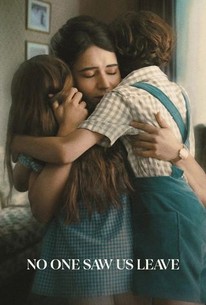
No One Us Leave series image. Photo Credit: www.rottentomatoes.com
While not everyone shared the same opinions about the series, that wasn’t the point of the evening.
The real magic of the night didn’t come from watching the show but from sitting in a room full of Jewish women, talking openly about what it means to see ourselves on screen, and in the world. There was laughter, conversation, and a real sense of community. There was also a feeling of being understood despite our difference in opinions. We talked about what it means to be Jewish today, and how rare it is to see that portrayed in mainstream stories. It was more than just an evening of entertainment; it was an evening of bonding and feeling “seen.”
So no, this isn’t really an article reviewing Nobody Wants This. Instead, it’s a reflection on the power of gathering and sharing space. It’s about how art, and the conversations it sparks, can create connection that lingers long after the credits roll.
Will I keep watching the show? Probably. It’s fun, and I do have a soft spot for Rabbi Noah (what can I say? Who doesn’t like Adam Brody?). But more importantly, I’ll definitely be back for more Women’s Circle events. Because sometimes, what starts as “just a fun night out” turns into something that reminds you who you are and who you belong with.
